Mastering the 3D Donut Seamless Pattern 8 for Professional Sublimation Results
The sublimation market is saturated with generic designs, which makes standing out a genuine challenge for small business owners and hobbyists alike. When you choose a 3D Donut Seamless Pattern 8, you are opting for a design that offers depth, texture, and visual interest that flat graphics simply cannot match. However, possessing a high-quality digital file is only half the battle. The difference between a best-selling 20 oz Skinny Tumbler and a product that gathers dust often comes down to how well you understand the technical nuances of the file you have purchased.
Many creators rush into printing without fully evaluating the specifications of their Instant Digital Download PNG. This haste leads to common pitfalls that affect print quality, alignment, and overall customer satisfaction. By understanding what makes this specific Donut seamless pattern unique and how to handle it correctly, you can avoid costly errors and elevate your final product.
Understanding the Technical Specifications
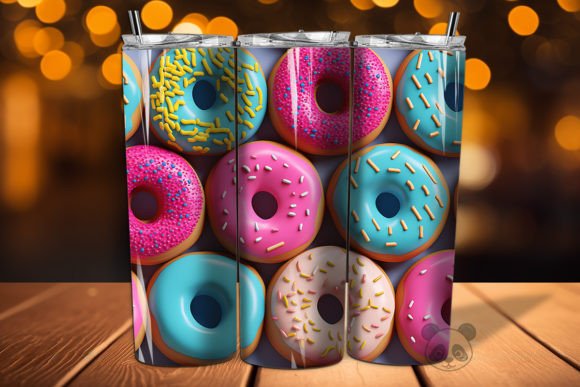
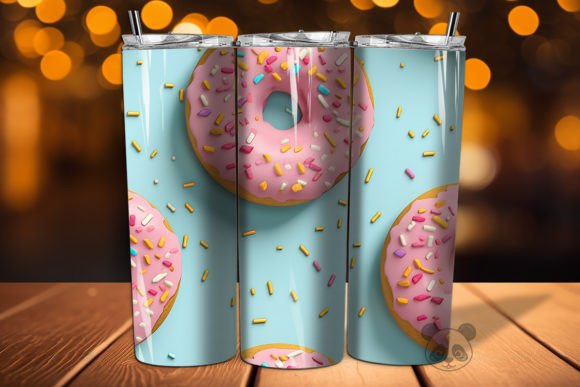
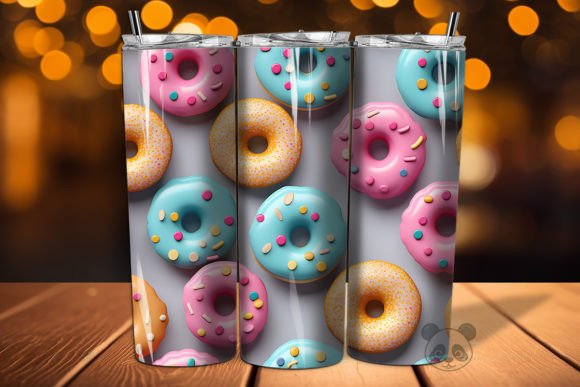
Before you even open your design software, it is crucial to recognize what you are working with. The 3D Donut Seamless Pattern 8 Background is not just a cute image; it is a precision tool. The file provided is a PNG with dimensions of 9.3 inches by 8.2 inches at 300 DPI. While these numbers may seem standard, ignoring their implications is a frequent mistake among beginners.
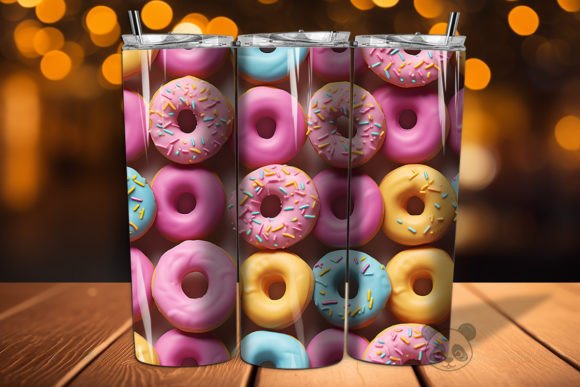
A common misunderstanding is assuming that "seamless" means the design will automatically wrap perfectly around any cylindrical object without adjustment. In reality, a Straight Tumbler Wrap PNG requires careful positioning. The 9.3-inch height is specifically tailored for standard skinny tumblers, but if you attempt to stretch this image to fit a different size or aspect ratio, you will distort the 3D design elements. The donuts, which rely on shading and perspective to create that three-dimensional effect, will look flattened or warped if the aspect ratio is not maintained.
Practical Advice: Always check the dimensions of your physical blank before starting your design layout. If your tumbler is slightly taller or shorter than the standard 20 oz size, you may need to crop the Donut background carefully rather than stretching it. Maintaining the integrity of the 3D tumbler wrap ensures the donuts look realistic and appetizing.
The Pitfall of Ignoring Color Profiles
One of the most overlooked details in sublimation printing is the color profile mismatch between your screen and your printer. The Donut watercolor aesthetic and the vibrant hues of the Donut png are calibrated for specific output conditions. Many users view their Donut 3D seamless pattern on an RGB monitor and expect the printed result to match exactly. This is rarely the case.
Sublimation printers typically use CMYK inks. When you print an RGB-based 3D background without proper conversion or profiling, colors can shift. Bright pinks might turn muddy, and the subtle shadows that give the donuts their 3D appearance may lose definition. This results in a Donut skinny tumbler that looks dull compared to the preview image.
Better Approach: Perform a test print on a small piece of sublimation paper or a scrap tumbler. Compare the test print to your screen under neutral lighting. If the colors appear washed out, adjust your printer’s color management settings. Do not assume the Instant Digital Download is "wrong" if it doesn't match your screen immediately; instead, calibrate your workflow to accommodate the transition from digital to physical.
Missteps in File Handling and Resolution
It is tempting to resize images freely in design programs, but doing so with a raster file like a PNG can be detrimental. The 3D Donut Seamless Pattern 8 is provided at 300 DPI, which is the gold standard for high-quality printing. If you enlarge the image beyond its original 9.3 x 8.2 inches, the software must interpolate pixels, leading to blurriness. This is particularly noticeable in the detailed textures of the Donut wrap, such as sprinkles or glaze reflections.
Another error is saving the file in a compressed format after downloading. Each time you save a JPEG or a heavily compressed PNG, you lose data. For a seamless pattern that relies on crisp edges and smooth gradients, this compression artifacting can ruin the professional look of your Donut tumbler wrap.
- Keep the Original: Always work from a copy of the original ZIP file content. Never overwrite the source file.
- Check Dimensions: Ensure your design canvas matches the 9.3 x 8.2 inch specification exactly.
- Avoid Upscaling: Do not increase the size of the Donut background beyond its native resolution.
Alignment and Seam Visibility
Even with a seamless pattern, poor alignment during the wrapping process can result in visible seams or cut-off designs. A frequent mistake is centering the design without accounting for the handle or the taper of the tumbler. While the 3D Donut Seamless Pattern 8 is designed to tile seamlessly, the start and end points of your wrap must align perfectly on the physical object.
If the pattern is misaligned by even a few millimeters, the continuity of the Donut 3D seamless pattern is broken. This disrupts the visual flow and makes the product look amateurish. Additionally, failing to account for the heat press pressure can cause shifting, where the ink transfers unevenly, creating ghosting effects.
Solution: Use alignment tools in your design software to mark the center and edges of your wrap. When applying the sublimation paper to the tumbler, use heat-resistant tape to secure it firmly. Ensure the paper is taut to prevent movement during the pressing phase. This attention to detail preserves the illusion of the continuous 3D design.
Evaluating Your Purchase Decision
Before buying any digital asset, including this Donut seamless pattern, consider your intended use. This file is ideal for straight-walled tumblers. If you plan to use it on curved mugs, tapered cups, or non-sublimation materials, the results will vary significantly. The Donut png is optimized for the specific curvature and surface area of a 20 oz skinny tumbler.
Ask yourself: Do I have the necessary equipment to handle sublimation printing? Do I understand how to mirror images if required by my specific printer setup? Are my blanks coated for sublimation? Answering these questions honestly prevents frustration. Remember, this is a digital file for instant download; there are no physical returns. Your success depends on your preparation and technical skill.
By treating the 3D Donut Seamless Pattern 8 with the respect it deserves—acknowledging its technical constraints and leveraging its artistic strengths—you can create products that stand out in a crowded marketplace. Focus on precision, color accuracy, and proper alignment to transform a simple digital download into a high-value physical product.