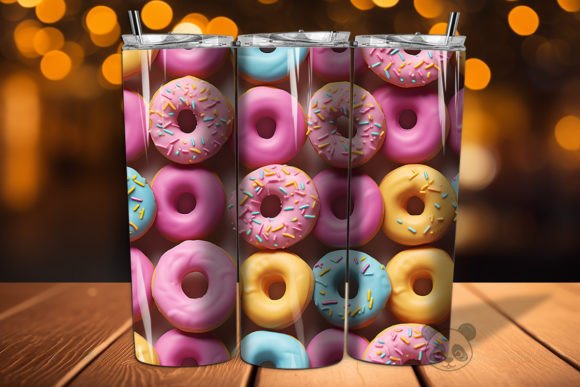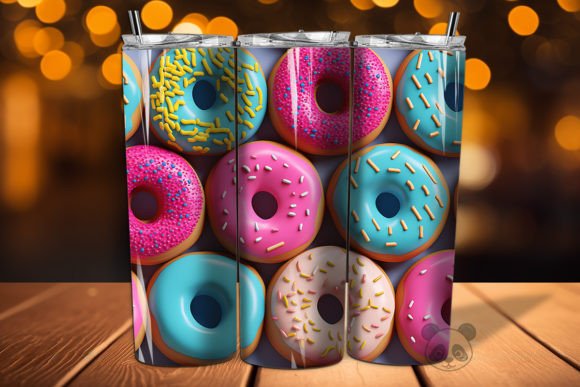
Exploring the 3D Donut Seamless Pattern 3 for Custom Sublimation Projects
In the rapidly evolving world of digital design and custom merchandise, finding the right graphic asset can significantly impact the quality and appeal of your final product. One standout option for creators looking to add a playful yet sophisticated touch to their inventory is the 3D Donut Seamless Pattern 3. This specific design offers a unique blend of three-dimensional realism and seamless tiling capabilities, making it an ideal choice for various sublimation applications, particularly for popular items like the 20 oz skinny tumbler.
For designers, small business owners, and hobbyists, understanding the nuances of this digital asset is crucial. It is not merely about downloading an image; it is about evaluating whether this specific style, resolution, and format align with your production needs. This article explores the characteristics of the 3D Donut Seamless Pattern 3, compares it to alternative design approaches, and provides practical guidance on when and how to utilize it effectively.
Understanding the Design Aesthetic and Technical Specifications
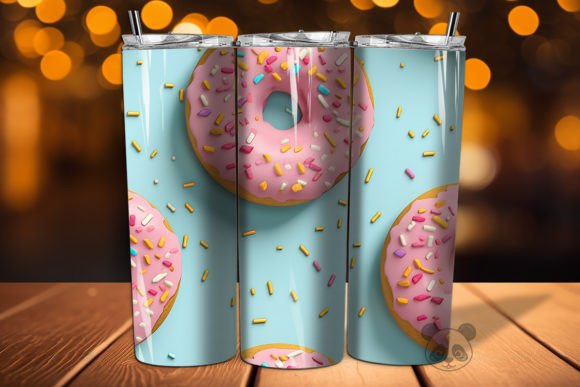
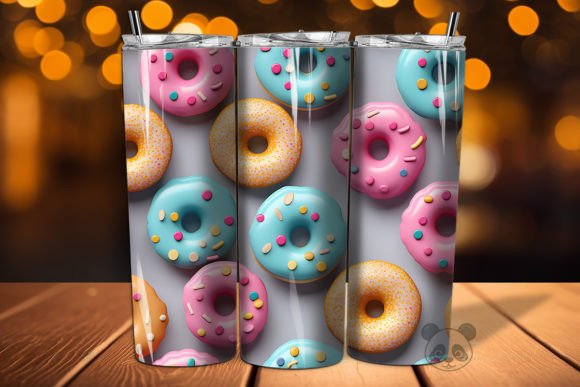
The 3D Donut Seamless Pattern 3 distinguishes itself through its visual depth and texture. Unlike flat, two-dimensional illustrations, this design employs shading, lighting, and perspective to create a lifelike appearance. The "3D" aspect refers to the rendering style, which mimics the look of physical objects, giving the donuts a tangible, almost edible quality. This is particularly effective in marketing, as realistic imagery often triggers a stronger sensory response from viewers.
Technically, the file is provided as a high-resolution PNG (Portable Network Graphics) with a resolution of 300 DPI (dots per inch). The dimensions are approximately 9.3 inches by 8.2 inches. For those unfamiliar with print standards, 300 DPI is the industry benchmark for high-quality printing. It ensures that when the image is transferred onto a substrate, such as a polymer-coated tumbler, the edges remain crisp, and the colors appear vibrant without pixelation. The seamless nature of the pattern means that the image can be tiled horizontally and vertically without visible breaks or seams, allowing for continuous wrapping around cylindrical objects.
It is important to note that this is a digital-only product. There are no physical items shipped. The value lies entirely in the digital file, which requires the user to have the necessary hardware and software for sublimation printing. This distinction is vital for buyers who may be new to the craft, as it shifts the responsibility of production entirely to the purchaser.
Comparing 3D Renders to Other Design Styles
When selecting a design for sublimation, creators often choose between several aesthetic categories: flat vector art, watercolor styles, photographic prints, and 3D renders. Understanding where the 3D Donut Seamless Pattern 3 fits within this spectrum helps in making an informed decision.
Flat Vector Art: Vector designs are scalable and clean, often used for minimalist or modern branding. However, they can sometimes lack the warmth and texture that appeals to consumers looking for cozy or indulgent themes. The 3D donut pattern offers more visual interest and depth compared to flat icons, making it stand out on crowded marketplaces.
Watercolor Styles: Watercolor designs, such as a "Donut watercolor" background, offer a soft, artistic, and hand-painted feel. They are excellent for bridal showers or gentle, pastel-themed products. In contrast, the 3D render is bolder and more contemporary. While watercolor might blur slightly during the sublimation process due to its diffuse edges, the sharp lines of a 3D render maintain their integrity better, provided the print settings are correct.
Photographic Prints: Using actual photographs of donuts can be realistic, but they often suffer from lighting inconsistencies and background noise. A 3D rendered pattern allows for controlled lighting and perfect repetition. The 3D Donut Seamless Pattern 3 provides the realism of a photo with the consistency of a graphic design, ensuring that every repeat of the pattern looks identical and professional.
Evaluating Fit for Different Sublimation Products
The versatility of a seamless pattern depends largely on the shape and size of the product being decorated. The 3D Donut Seamless Pattern 3 is specifically optimized for straight-walled cylindrical items, such as the 20 oz skinny tumbler. The 9.3 x 8.2-inch dimensions are calculated to wrap around these standard tumblers with minimal waste or overlap issues.
Skinny Tumblers: This is the primary use case. The height of the pattern matches the printable area of most 20 oz skinny tumblers, while the width allows for a full wrap. The seamless nature ensures that the donuts do not appear cut off awkwardly at the seam, creating a professional, continuous look.
Straight Tumbler Wraps: Beyond skinny tumblers, this design can be adapted for other straight-sided containers, such as certain beer cans or straight-wall mugs. However, users must check the specific dimensions of their product. If the item is wider than 9.3 inches, the pattern will need to be tiled carefully to avoid stretching, which could distort the 3D effect.
Limitations on Curved or Tapered Items: This pattern is less suitable for tapered mugs (wider at the top than the bottom) or curved surfaces like phone cases without significant editing. Applying a rectangular seamless pattern to a tapered surface results in distortion at the top or bottom. For such items, designers typically need specialized templates or vector-based designs that can be warped to fit the contour.
Practical Considerations for Digital Downloads
Purchasing an instant digital download comes with specific responsibilities. Unlike physical goods, there is no return policy for digital files once downloaded. Therefore, buyers must ensure they have the technical capability to use the file before purchasing.
- Software Requirements: You need graphic design software capable of handling high-resolution PNG files. Programs like Adobe Photoshop, Illustrator, or free alternatives like GIMP and Canva (with appropriate subscriptions for resizing) are commonly used.
- Sublimation Knowledge: The buyer must understand the sublimation process. This includes knowing how to mirror the image, select the correct color profile (usually sRGB for design, converting to printer-specific profiles), and set the right heat press time and temperature. The file itself does not include instructions on how to sublimate.
- Color Accuracy: Colors on a screen often look different than they do when printed. The vibrant pinks and browns of the donuts may vary depending on the sublimation paper, ink brand, and blank supplier. It is advisable to run test prints on cheap blanks before committing to a large batch.
When to Choose This Pattern vs. Alternatives
Deciding whether the 3D Donut Seamless Pattern 3 is the right choice depends on your target audience and product line.
Choose this pattern if:
- You are producing items for a younger demographic or those who appreciate trendy, pop-culture-inspired aesthetics.
- You need a quick, high-quality solution for standard 20 oz skinny tumblers without spending hours designing from scratch.
- You want a design that stands out due to its depth and realistic texture.
- You are comfortable with the technical aspects of sublimation printing.
Consider alternatives if:
- Your brand identity is strictly minimalist or corporate, where a playful donut theme may not align.
- You are printing on non-standard sizes that require extensive resizing, which could compromise the 300 DPI quality.
- You prefer a handcrafted, artisanal look, in which case a watercolor or hand-drawn vector might be more appropriate.
- You do not have access to a sublimation printer and heat press, as this file cannot be used for direct-to-garment printing or vinyl cutting without significant modification.
Making the Most of Your Digital Asset
To maximize the value of the 3D Donut Seamless Pattern 3, consider combining it with complementary design elements. For instance, adding a personalized name or a simple quote in a contrasting font can transform a generic pattern into a customized gift item. However, ensure that any added text does not clutter the design, allowing the 3D donuts to remain the focal point.
Additionally, keep an eye on trending color palettes. While the donuts themselves have fixed colors, the background or accent elements can be adjusted if you have the skills to edit the PNG. Some creators place the pattern over a solid color background to change the overall mood of the design, shifting from a bright, energetic look to something more subdued and elegant.
In conclusion, the 3D Donut Seamless Pattern 3 is a robust resource for sublimation creators seeking a high-impact, ready-to-use design. Its strength lies in its realistic 3D rendering, seamless tiling capability, and optimal sizing for popular tumbler blanks. By understanding its technical specifications and comparing it against other design styles, you can determine if it fits your creative vision and production workflow. As with any digital asset, success depends on the user's ability to integrate it effectively into their manufacturing process, ensuring that the final product meets the high expectations of today's consumers.