Mastering the 3D Inflated Camouflage Tumbler Design for Professional Sublimation Results
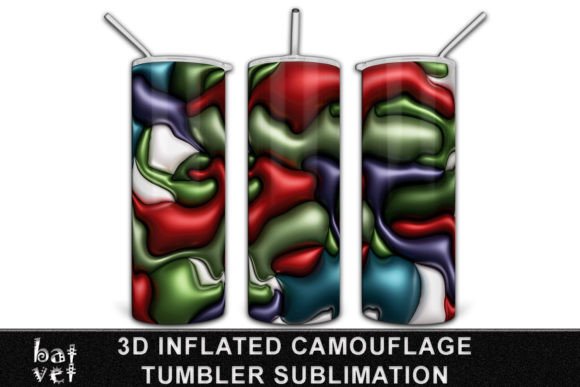
The trend of 3D inflated camouflage tumbler design has taken the custom drinkware market by storm, offering a tactile visual experience that flat prints simply cannot match. This aesthetic, often referred to as "puffy camo," creates an illusion of depth and texture, making standard 20 oz tumblers look like premium, high-end merchandise. For creators, small business owners, and hobbyists, leveraging this style can significantly boost product appeal. However, achieving a flawless finish requires more than just downloading a file and hitting print. Many enthusiasts overlook critical technical details, leading to wasted materials and frustrated customers. Understanding the nuances of the 3D inflated camouflage tumbler sublimation puffy camouflage PNG workflow is essential for consistent, high-quality results.
Understanding the Visual Appeal and Technical Reality
At its core, the puffy camouflage inflated 3D design relies on clever shading, highlights, and shadow placement to trick the eye. When applied correctly to a curved surface, these elements mimic the look of inflated balloons or padded fabric. This is why the star sublimation elements often integrated into these wraps are so popular; they add a focal point that breaks up the chaotic nature of camouflage while maintaining the cohesive 3D theme.
People are drawn to this style because it stands out in a saturated market. A standard flat camo print can look dated or generic. In contrast, the inflated effect suggests modernity and craftsmanship. However, the gap between expectation and reality often widens when creators fail to account for the specific requirements of sublimation printing on cylindrical objects. The design is not just a pretty picture; it is a technical map that must align perfectly with the physical dimensions of the tumbler.
Common Mistakes That Compromise Quality
One of the most frequent errors involves ignoring the specific print dimensions. The provided tumbler wrap puffy camouflage files are typically sized at 9.3″ x 8.2″ at 300 DPI. Beginners often attempt to resize these images arbitrarily to fit different tumbler brands without maintaining the aspect ratio or resolution. Stretching or compressing the image distorts the "inflated" effect, making the circles look like ovals and ruining the 3D illusion. This distortion is immediately noticeable to the consumer and devalues the product.
Another significant oversight is poor file management. When you receive a zip file containing a high resolution printable PNG file, the temptation is to open it directly from the compressed folder. This is a recipe for disaster. Editing or printing from a temporary unzipped location can lead to corrupted data or loss of the original high-quality source. Furthermore, failing to rename and organize your files means you may struggle to locate the correct version later, especially if you have multiple variations of the 3D inflatable camouflage pattern.
Color management is also frequently misunderstood. Sublimation printers do not display colors on screen exactly as they will appear on the metal substrate. Many creators skip the test print phase, assuming the vibrant greens and browns of the camo will transfer perfectly. Without proper ICC profiles and heat press calibration, the resulting colors can appear washed out or muddy, losing the crisp contrast needed for the 3D effect to pop.
How These Errors Impact Your Business and Craft
The consequences of these mistakes extend beyond aesthetics. Wasted substrates and ink increase production costs, eating into profit margins. For small business owners, consistency is key to building a brand reputation. If one tumbler has a distorted pattern and another has faded colors, customer trust erodes quickly. Returns and negative reviews often cite "poor print quality" or "design mismatch," which are direct results of technical negligence rather than design flaws.
Moreover, inefficient workflows slow down production. Spending time troubleshooting why a print looks pixelated or why the seams do not align correctly reduces the number of units you can produce in a day. In a competitive market, efficiency determines scalability. By avoiding these common pitfalls, you streamline your operation and ensure that every 20 oz tumbler wrap meets professional standards.
Practical Advice for Flawless Execution
To avoid these issues, start by strictly adhering to the provided specifications. Ensure your design software is set to the exact dimensions of 9.3″ x 8.2″. Do not resample the image unless you are certain you are maintaining the 300 DPI resolution. Use the "lock aspect ratio" feature in your editing tools to prevent accidental stretching.
Proper file handling is non-negotiable. Upon downloading, immediately extract the zip file to a dedicated project folder on your hard drive. Rename the file with a clear, descriptive title that includes the date and version number, such as PuffyCamo_Green_v1_2023.png. This simple habit saves hours of searching and prevents version control errors.
Before committing to a full production run, always perform a test print on a single tumbler. Check the alignment of the seam. The 3D inflated camouflage tumbler design should wrap seamlessly without obvious breaks in the pattern. Adjust your heat press time and temperature based on the manufacturer’s recommendations for your specific tumbler brand. Remember, different coatings on tumblers react differently to heat. A slight adjustment in temperature can mean the difference between a vibrant, sharp image and a blurry, discolored one.
What to Check Before You Print
Before you send your job to the printer, conduct a final review. Zoom in to 100% on your screen to check for pixelation. Ensure that the star sublimation elements are crisp and not blurred. Verify that the color profile matches your printer’s capabilities. If you are using a specific brand of sublimation paper, ensure it is compatible with your ink type to prevent bleeding.
Additionally, consider the end-user experience. The puffy camouflage PNG should be oriented correctly so that the main visual elements face forward when the handle or lid is in a standard position. While tumblers are rotated during use, having a logical "front" to the design enhances perceived value. Take a moment to visualize how the inflated 3D design will look in natural light versus indoor lighting, and adjust brightness if necessary.
By treating the 3D inflated camouflage tumbler design as a technical process rather than just a decorative choice, you elevate your craft. Attention to detail in file preparation, printing, and pressing ensures that the final product reflects the high quality of the original digital art. Whether you are a beginner learning the ropes or a seasoned professional refining your workflow, these practices form the foundation of successful sublimation business operations.
For those ready to start, remember that the key lies in the details. Download your files, organize them meticulously, respect the dimensions, and test thoroughly. The result is a stunning, professional-grade 20 oz tumbler that captures the eye and satisfies the customer. Embrace the learning curve, correct course when necessary, and let the unique texture of the puffy camouflage style set your products apart in a crowded marketplace.